
FAMOUS VISITORS TO LOW HIGH SNAB
Along with Wainwright, to whom I have dedicated a separate page. Low High Snab has had a number of famous visitors or guests over the years, notably:
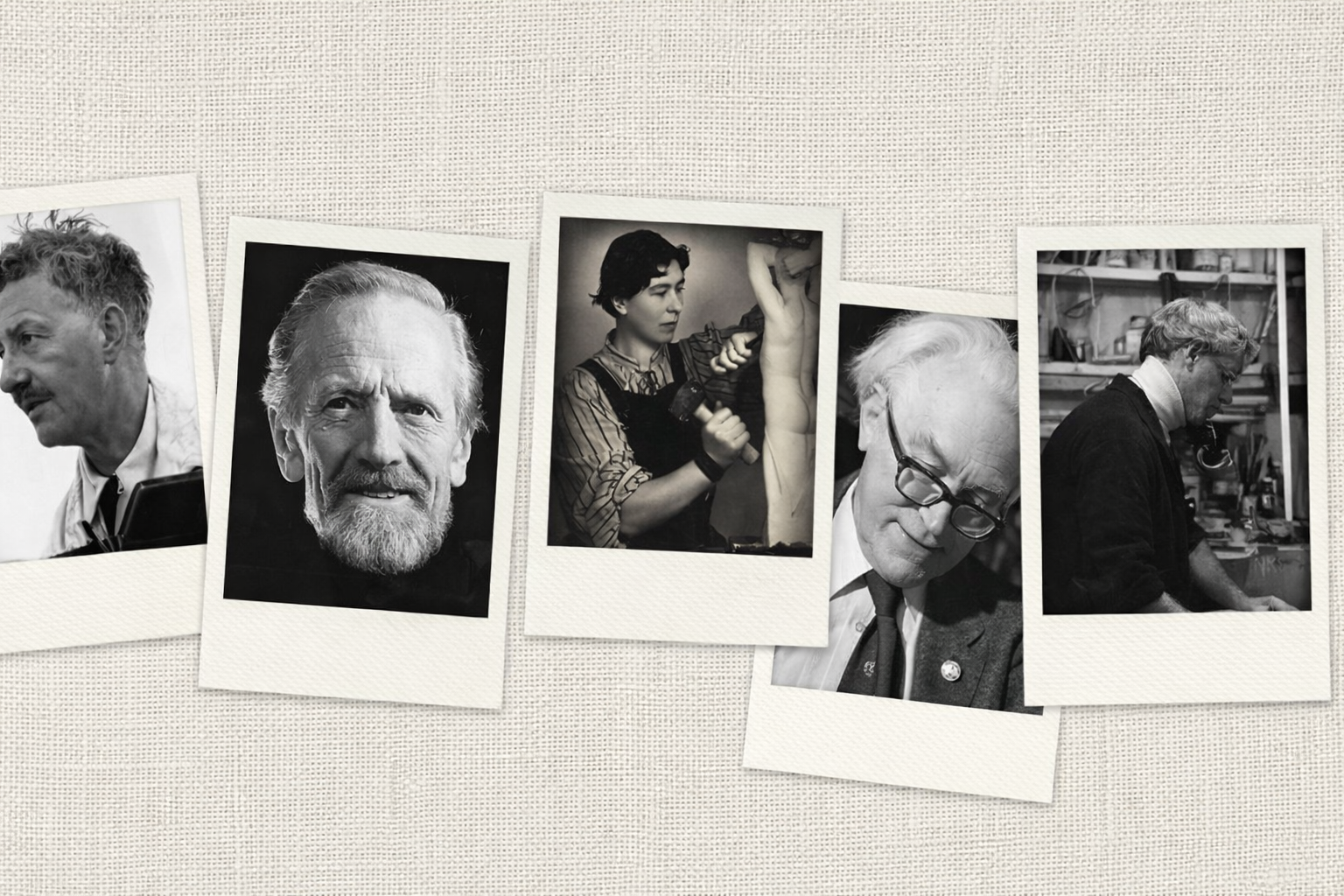
Josefina Alys Hermes de Vasconcellos (1904 – 2005) was an English sculptor who worked in bronze, stone, wood, lead and perspex. She was at one time the world's oldest living sculptor. She lived in Little Langdale, Cumbria, much of her working life. Her most famous works include Reconciliation (Coventry Cathedral, University of Bradford); Holy Family (Liverpool Cathedral, Gloucester Cathedral); Mary and Child (St Paul's Cathedral); and Nativity (at Christmas) at St Martin-in-the-Fields (Trafalgar Square).
William Heaton Cooper (1903-1995) was born in Coniston, the third son of accomplished landscape painter Alfred Heaton Cooper. He studied at the Royal Academy School in London, exhibited at the Royal Academy, the Royal Society of British Artists and the Royal Institute, but his love was always for the Lake District, and during the 1920s he became an authority on the lore and landscape of the area. His style of painting was always more impressionistic than his father's, and he used his knowledge of the mountains’ geology to produce spare and evocative depictions of the crags and fells. His ability to capture the ever changing light of Lakeland created pictures that reflected his own deep spirituality and resulted in a body of work which continue to delight his many admirers today.
Dr. Archibald Edmund Clark Kennedy (1893–1985) was a Scottish physician and academic who built a respected career in internal medicine and medical education during the early to mid-20th century. He served in World War I as a medical officer, an experience that shaped his practical, disciplined approach to patient care. After the war, he became known as a dedicated teacher, influencing generations of students through his emphasis on clinical observation and ethical responsibility. Outside medicine, Kennedy was an enthusiastic huntsman who spent time in England’s Lake District, where he developed a deep appreciation for the landscape and rural sporting traditions.
The 14th Dalai Lama (b. 1935) Tenzin Gyatso is the incumbent Dalai Lama, the highest spiritual leader and head of Tibetan Buddhism. He served as both the spiritual and temporal leader of Tibet until 1959, after which he went into exile and continued to lead the Tibetan government-in-exile, represented by the Central Tibetan Administration in Dharamsala, India. In 1975, during a visit to England, he travelled to the Newlands Valley in the Lake District, where he stopped at Low High Snab.
Percy Kelly (1918-1993) was born in Workington, Cumbria and showed an early aptitude for drawing before leaving school at 14 to work for the Post Office. His artistic development was interrupted by the Second World War, during which he served in the Royal Signals, applying his draughtsmanship skills to map-making. After the war, he returned to postal work while painting obsessively, later studying full-time at Carlisle College of Art and Design from 1961 to 1965, and achieving recognition through accepted submissions to major institutions and membership of the Lakes Artists Society between 1956 and 1963. In the 1970s, he met John and Molly Gerrish and visited them regularly at Low High Snab, a connection that formed part of his quiet personal world. Despite holding only a small number of exhibitions between 1966 and 1984, he remained a deeply private artist, declining many opportunities to exhibit or sell his work despite significant interest.
John Hawkridge (1948–2020) was a determined mountaineer and author who has achieved remarkable feats despite living with cerebral palsy, a condition affecting movement and coordination. From an early age, he developed a passion for the outdoors, finding both challenge and freedom in nature. Through persistence and rigorous effort, he adapted his climbing techniques to overcome physical limitations, including successfully reaching Everest Base Camp. His journey reflects not only physical endurance but also exceptional mental resilience and problem-solving ability. Hawkridge’s life and writing continue to inspire others by proving that perceived limitations can be challenged and redefined.
John’s autobiography Sticks and Stones was published in 1987. This was followed by Uphill All The Way in 1991.
Michael Foot (1913 – 2010) was a British politician, journalist, and Labour Party leader who served as Leader of the Opposition from 1980 to 1983. He began his career in journalism with Tribune and the Evening Standard, co-authoring the 1940 anti-appeasement pamphlet Guilty Men. Foot was a Member of Parliament for over 40 years and became a leading figure on the left of the Labour Party, known for his powerful oratory.
He served in government as Employment Secretary under Harold Wilson and later as Leader of the House and Deputy Leader under James Callaghan. His leadership was marked by internal party divisions, including the 1981 formation of the Social Democratic Party.After leading Labour to a heavy defeat in the 1983 general election, he resigned and was succeeded by Neil Kinnock.
Richard Wordsworth (1915-1993) was a British academic, writer, and lecturer best known for his work in literary studies and for helping to sustain public interest in the life and legacy of the Romantic poet William Wordsworth. Though not as widely known as his famous namesake, Richard Wordsworth played an important role in promoting scholarship and discussion around Romantic literature in the mid–20th century.
A key achievement in his career was his collaboration with Molly Lefebure, a writer and former secretary to Cyril Hare. Together, Wordsworth and Lefebure co-founded the Wordsworth Conference, an annual gathering devoted to the study and appreciation of William Wordsworth and his contemporaries. The conference brought together scholars, students, and enthusiasts in the Lake District, creating a space where academic discussion could blend with the landscape that inspired much of Wordsworth’s poetry.